

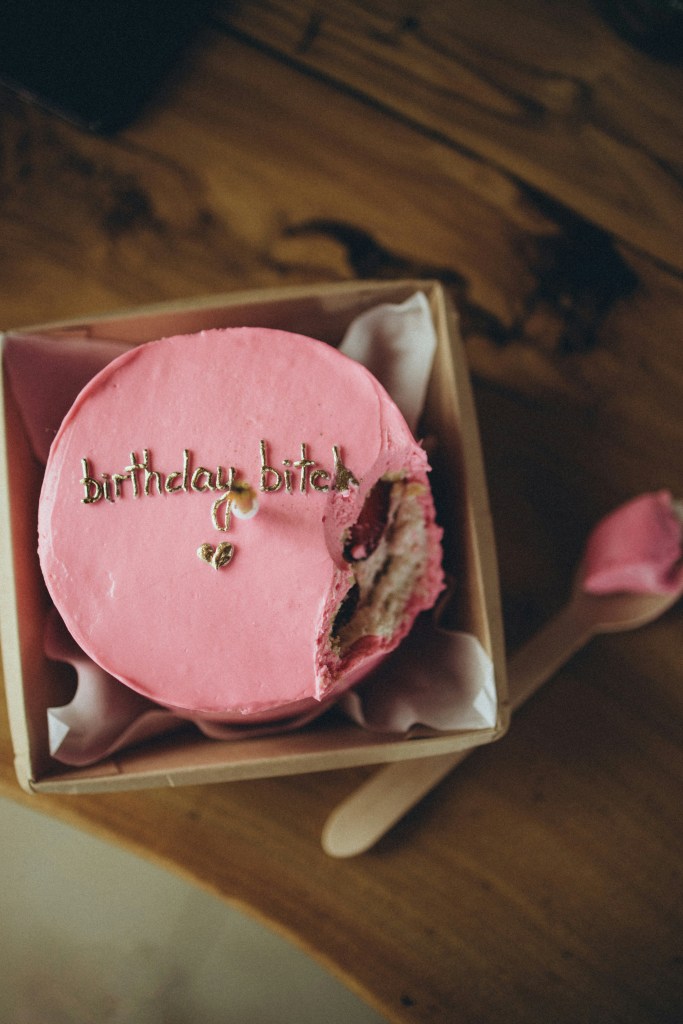
To celebrate my birthday this year, I’ve decided on a lunchtime party for my women friends for two main reasons: firstly, to acknowledge their value in my life and secondly, because I suspect we’ll have a better time without the men.
That may sound harsh, but this birthday is an important milestone and it seems logical to share it with a group of people who value me and share similar life experiences and goals for the future. They also ask questions, listen to my views, and are open to discussing most topics.
The women in my life share my desire to remain curious
Most of my girlfriends share a similar desire to remain curious during this chapter of our lives, to keep learning, growing and evolving. We haven’t written ourselves off – as society would have us do – and are open to new experiences. Whereas many men in our age group – not all men! – seem to rather view this chapter as a time to take the foot off the pedal, make their worlds smaller, or ruminate over past mistakes.
Don’t get me wrong, we’re not perfect. We don’t always agree on everthing. But rather like the three girlfriends in the latest “White Lotus” episode, the glue that holds us together is the history and experiences we have shared together. We don’t expect perfection but generally our values align and we have each other’s back.
I realise my decision won’t be popular with everyone – and may even seem hypocritical to those on whom I’ve foisted my robust opinions about discrimination in the past. But “It’s my party” and all that. Viewed often as one of those “difficult”, opinionated women (which no doubt prompted my husband’s recent request to discuss my aggression with my therapist), I am unlikely to change that opinion anytime soon.
“When we embrace who we are and decide to be authentic, instead of who we think others want us to be, we open ourselves up to real relationships, real opportunities, and real success.” Angel Chernoff
I’m also a bit weary of the inevitable migration that so often happens midway through dinner parties, when the men migrate to one end of the table – to discuss “serious” topics like sports and politics – leaving the women at the other, invariably to talk about them. That may sound whiney, but as someone who is pretty socially anxious and needs a few drinks to turn up, I expect more.
I don’t dispute that men and women are different – and with age, both sexes can become less tolerant of the views of others and more passionate about their own. But my invite list has nothing to do with a dislike for men – I married one and have a son – it is a genuine desire (even if it looks like making unnecessary waves) to remove any dead weight and awkwardness.
Women expect more
Lately, I’ve noticed an increasing dominance of shouty political discussions at the table when the opinions of women are often overlooked. Now I’m no expert in current global politics, but surely everyone has a right to offer their views without judgment. And if women are deemed capable of driving home, surely they are capable of voicing an opinion.
Another peeve is how the conversation often steers away from topics that affect women. I don’t expect men to know the benefits of HRT, but as someone who has researched the symptoms of prostate cancer, I expect them to inform themselves about our issues. Their indifference to our world – and in particular, the threats we face – deepens the divide between the genders. It exacerbates a growing resentment in some women (who don’t feel seen or heard) and a defensiveness in certain men who feel targeted.
A growing resentment is developing in some middle-aged women
I understand why some men of my generation are uncomfortable about showing their vulnerability. Raised in a culture of toxic masculinity, few were taught the benefits of deep connection, the link between openess and trust. Whereas women see the gateway that mutual respect provides. They understand that strong friendships require investment.
Put a small group of women together and they’ll always find common ground – grey pubes was a massive conversation at a recent gathering. But though we can talk for hours about our kids, latest bargains, or that great salmon recipe we recently discovered on Insta, we can also talk the big stuff. Some of us even know something about sport!
There’s a familiar pattern each time I meet someone new of the opposite sex. In an attempt to keep them engaged, I pose question after question about their lives, resulting in a one-sided, tedious conversation that feels tantamount to bullying. Rarely am I asked anything about my life.
“Where are the questions from men?” asked Nikki Gemmell in a recent article for The Australian about dating.
Are we really that terrifying or inconsequential? Because my time is far too precious now to waste on people who aren’t interested in what I have to say. And the standard response of men to such criticism of “we’re just different” isn’t good enough.
I’m not disputing that people connect more easily through shared experiences – as Belinda, the middle-aged character in the tv series Fleabag explained:
“I’ve been longing to say this out loud. Women are born with pain built in. It’s our physical destiny—period pains, sore boobs, childbirth, you know. We carry it within ourselves throughout our lives. Men don’t. They have to seek it out. They invent all these gods and demons so they can feel guilty about things, which is something we do very well on our own. And then they create wars so they can feel things and touch each other and when there aren’t any wars they can play rugby. We have it all going on in here, inside. We have pain on a cycle for years and years and years, and then just when you feel you are making peace with it all, what happens? The menopause comes. The f***ing menopause comes and it is the most wonderful f***ing thing in the world. Yes, your entire pelvic floor crumbles and you get f***ing hot and no one cares, but then you’re free. No longer a slave, no longer a machine with parts. You’re just a person. In business.”
Or that men’s life experiences don’t shape them too. I mentioned earlier the negative consequences of toxic masculinity which are still playing out, and and I know for a fact that many men are currently feeling attacked by debates around consent, violence to women and abortion rights. But does their defensiveness or difference in opinion mean we must leave uncomfortable topics like those off the table?
The debilitating symptoms of menopause, for example, have finally been recognised by the medical profession. However, many men continue to diminish the impact of this stage in a woman’s life. They still refuse to understand why so many women crack under the pressure of balancing their jobs with running a household and providing elderly parent care whilst suffering from hot flushes, insomnia, joint pain, osteoporosis, foggy brains and mood changes.
There are many reasons why “grey divorce” is on the rise
Furthermore, they are surprised when some women finally emerge from the motherhood cage – if our adults kids do eventually leave home – and expect more. More acknowledgment for their contribution and the re-establishment of a deeper connection after the tough years of parenting or a challenging career .
Women are weary.
Despite the best intentions of the #metoo campaign, in some circles feminism has become a dirty word alongside the rise in right-wing politics. Some men feel attacked – welcome to our world! – and are trying to deflect from the original purpose of the movement – calling out misogynists and sexual abusers – to make everything again about them.
The susceptibility of women to certain health issues in later life is another bone of contention
Research has proven that women carry the mental load in most homes. and who knows how much that contributes to breast cancer (which affects 1 in 7 women) or how much unnecesary suffering women with endometriosis and ADHD – conditions that have only recently been recognised in our sex – have endured. Not to mention their higher risks of osteoporosis, autoimmune disease and dementia. The historical lack of medical research into these conditions makes them an even harder pill to swallow.
“Despite making up slightly more than half the world’s population, the health of women has been chronically underfunded and under researched.” John Kruse, M.D., Ph.D | Medium
Elinor Cleghorn writes about the issue of the historical medical gaslighting of women in her book, Unwell Women. “Women’s susceptibility to illness and disease has been shaped and distorted by prejudiced beliefs that possessing a uterus defines our inferior position in the man-made world.”
Sometimes, it’s hard to believe that any real progress has been made.
There’s nothing new about double standards
Every woman I know has experienced some level of medical gaslighting. My own torrid experiences – when I first voiced my concerns to my GP about my son’s ADHD and sought advice about early perimenopause – were scarring.
And this is because, despite the long fight for equality, women are not prized in the same way as men. Physically, men evolve into “silver foxes” whilst women must resort to dangerous diets, fillers and hair dye to remain relevant. Men are still viewed as “the head” of the family and lauded for what they provide, whereas a woman’s contribution – often less financially due to the gender pay gap, the cost of childcare and the unpaid work they do – is often ignored. Each time my father praises my husband for being a great provider, I question what he thinks I’ve been doing for the past thirty years.
The quality of dinner party conversation is a tiny speck in the grand scheme of gender politics. But with smalltalk dying due to new technology, hybrid work, the cost of living and the polarising effects of the media, I fear it is helping to widen the gender gap.
Emojis are hardly a solution, and with fewer face-to-face opportunities to connect and exchange ideas, the innate differences between the sexes pull us further apart. I don’t expect men to understand vaginal dryness, but I would like them to take an interest in the bigger social issues that affect women.
As a recent convert to the Mel Robbins “Let Them” approach, I suppose I could step back and accept their boundaries with grace. But, in this instance, acceptance feels like a regression, if not a failure. It smacks of a return to the fifties when men congregated in the pub after a hard day’s work – and I’m not disputing that men work hard -and women picked up the slack at home after their day’s work. But surely, if men truly valued us and saw us as equals, they would feel as strongly about our struggles as they do the Middle East crisis.
 LOUISA SIMMONDS
Leave a comment