
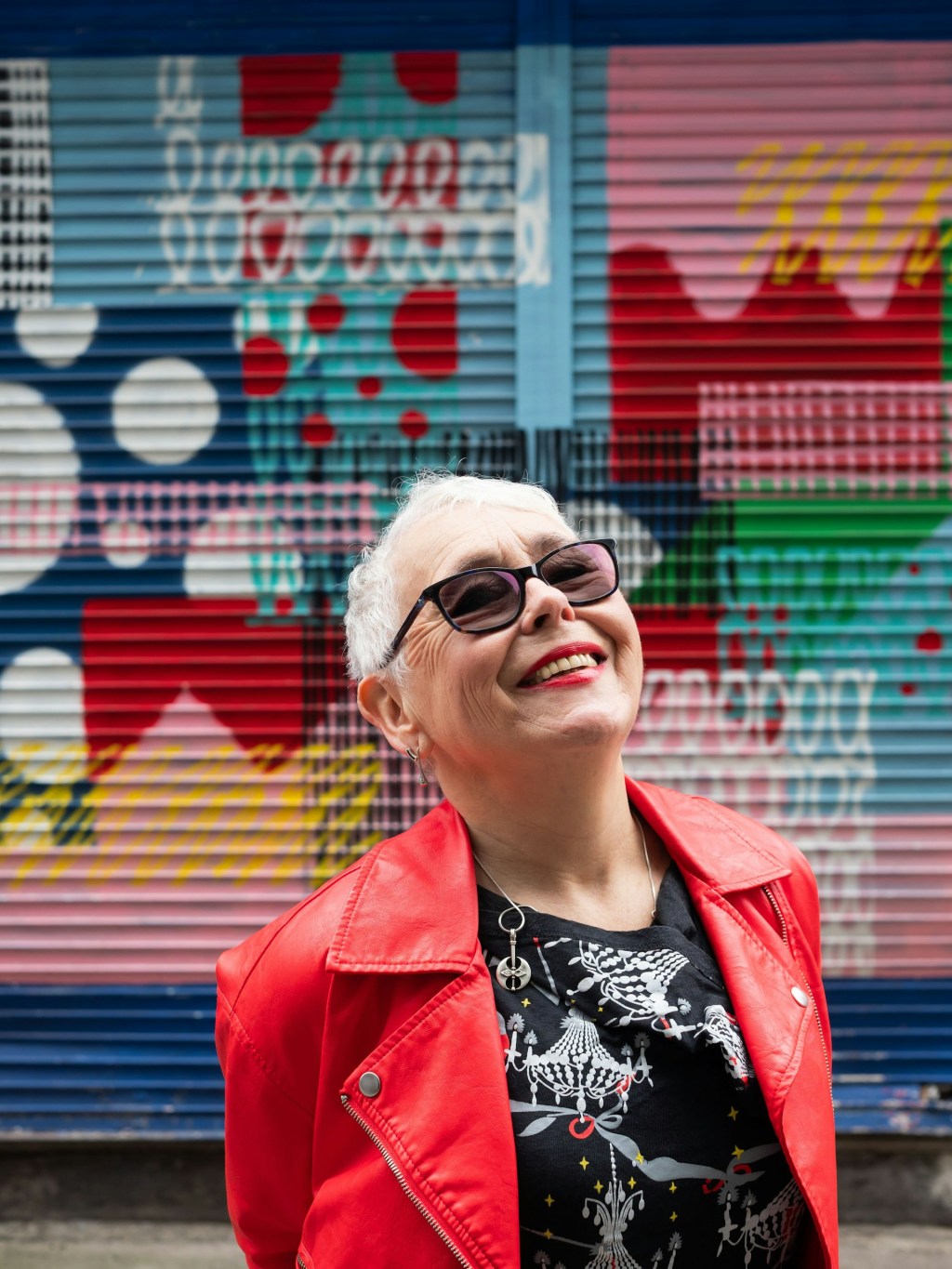
“The standards for ageing while females are impossible to meet.”
I am a mature woman. I like to think I fit into the upper end of the middle- age range, but the maths don’t lie. From a biological and society perspective, I am officially old.
“In our hypercapitalist, youth-centric western culture, ageing well tends to mean spending money and time trying to look and move like younger versions of ourselves.” Ashton Applewhite, The Guardian
Why are women expected to challenge the ageing process?
I am conflicted about this. Although logically, I know that ageing shouldn’t matter to me. It does, despite my lack of any real control over the process. Whilst I come to terms with the acceptance of my physical and mental decline, society is there, constantly reminding me of my limitations. Rather than allowing me to enjoy the benefits of my new quieter life and greater freedom — a part-time job with less pressure, fewer financial challenges, empty-nesting – it demands of women a few more pounds of flesh.
Shilst other cultures embrace it, Western society expects women to challenge the ageing process at every turn. It celebrates youth, influenced by celebrities like the Kardashions, under-nourished catwalk models, older men who date younger women – thank you, Keanu Reeves, for bucking the trend – and actresses who “have work” to remain employed.
The pressure to stay youthful is unrelenting, and although the idea of “ageing disgracefully” has some appeal, I have neither the energy nor inclination to party hard anymore.
I have more important things to do than spend time worrying about fine lines and chin hair
Neither, as Ashton Applewhite points out in her article for The Guardian, do I accept the premise of ‘ageing gracefully’, of ‘sitting down and shutting up’. Frankly, there’s enough to worry about with menopause and the many health concerns it exacerbates, watching my grown-up kids find their way in the world, and the current, depressing state of global politics.

Luckily, I have a grounded sisterhood of friends who, like me, are trying to resist the pressure to turn back the clock. And although we exercise more than we want, have cut back on our alcohol intake, and are undoubtedly keeping the serum companies in business, we view ageing as a privilege.
Fortunately for us, Botox came a little too late to save our skin. We missed that magical window – according to beauty influencers – of the longterm benefits of the treatment.
“The contradictions are everywhere. Embrace ageing, but appear to not age.” Ashton Applewhite, The Guardian
“These bodies are just on loan to us”
As a contestant on the tv show, Love Is Blind, pointed out: “These bodies are just on loan to us.” Stoically, my friends and I remain in the “embracing our age” camp. Not because we’re insensitive to our invisibility, but because we recognise that authenticity is more important to us. Our experience of the more challenging aspects of life – health concerns, personal failures, and losing people we loved – have taught us grace, humility and self-love. And honestly, we feel a bit sorry for those expressionless women who don’t recognise their worth.
Admittedly, the “letting go” and “giving less fucks” narrative have been a godsend.
The success of the anti-ageing revolution feeds off on our vulnerabilities
However, it is taking time to adapt to this older version of me. Brainwashed for years not to show any sign of a life well-lived, it is easy to focus on the pitfalls of ageing – the double chin that has elongated into a turkey neck, the jowls of a St Bernard, and heavily-hooded eyes that compromise the windows to my soul. And if I could be bothered, money was no object, and the longterm risks of treatment were fully understood, the temptation of a glow-up would be hard to resist.
“Although some of the variations in older people’s health are genetic, most is due to people’s physical and social environments.” World Health Organization
But fortunately, this new stage of invisibility has benefits too. Not so much when I’m standing at a bar, but in terms of unwanted attention, walking home alone late at night without fear, and leaving the house make-up-free. A personal benefit has been pushing out my six-week highlights by a few weeks.
And the attitude of my partner also helps. Never one to place much value on looks, he only seems to compliment me on the days I look like shite – possibly, a clever, money-saving ploy.
So why do I continue to compare myself to other women my age? Why do I admire Helen Mirren so much for her approach to ageing and yet cannot help noticing how much older she looks to her co-stars?
Because that is what I’ve been programmed to do since my first Cosmopolitan magazine. To view women critically.
Ageing is not for the faint-hearted, but as in most things in life, it is our approach to it that matters
The real question, I suppose, is whether I will be worrying about my turkey neck and the hairs on my chin on my death bed. Or will I be celebrating my children, my marriage, the wisdom that has come from the tough times, and the many close connections I have forged during my life?
Ageing is not for the faint-hearted, but as in most things in life, our approach to it is what matters. As such, and as cliched as some of these sound, the following are 7 essential truths I have taken away from the process:
- Kindness, gratitude, purpose and curiosity are the best indicators of a life well-lived. In my opinion, they are also the best emotions and approaches for defying the ageing process, physically and mentally.
- Authenticity, emotional intelligence and the beauty within are far bigger turn-ons at this stage of life than looks.
- Sun screen, social connection and sleep are three of the most underrated age-busters.
- There is a distinct correlation between good physical health and good mental health.
- Beauty products and genes may help with the ageing process, but our experiences, environment, lifestyle and sense of fulfilment truly determine how good we look.
- Ageing is a privilege, denied to many.
- One danger of ageism is that it closes the door on the knowledge and wisdom there is to learn from older generations.
Of course, the decision to turn back the clock physically is personal. But imagine if instead of judging a book by its cover, society chose to open it, eager to read the content inside.
Photo by Center for Ageing Better from Unsplash.com


 LOUISA SIMMONDS
Leave a comment